

Welcome to the Fiction Emailer: A newsletter that aims to make sense of our chaotic world through the lens of ‘Speculative Journalism & Fiction’ by rayaan_writer. Find here long-form essays and interviews that will help you think clearer, read sharper, write better, and look forward to an optimistic future. Visit my site to know more.
Important: I’ve moved my site from Beehiiv to Substack for now.
Join My WhatsApp Channel: Every other day, I send you one article worth your time… curated for people who think before they scroll. [Link]
Why to be Indiana Jones as a newsletterer
You need the skills of Indiana Jones to scavenge the Internet.
This requires the surveying technique that George Newman explains in his book How Great Ideas Happen.
In the opening chapter, George writes about a successful paleontologist from Kenya, Kamoya Kimeu, who had a knack for understanding terrain.
Kamoya was a goat herder who walked a lot and knew the land’s geography. It helped him become very sharp at guessing the secrets hidden underneath. After answering a local call for help for a paleontological work, he rapidly became skilled at spotting fossils.

I have been thinking about Kamoya’s story and what it means to hunt for ideas in the times of AI and newsletter abundance. I believe Kamoya mastered the art of geology as he enjoyed exploring the land thanks to his comfort as a long walker. This helped him become an expert dino-bone hunter.
In the book, George says, real spark of creativity “often lies in what is new to us, not necessarily what is new to the world.”
To be a creative newsletterer, you have to be curious and hunt for ideas…just like how Indiana Jones travelled the globe for treasures. It’s ideal to adopt some frameworks that aids in capturing ideas faster and pushes you to think actively while scouring the web for uncharted pixel islands of wisdoms.
How to Think While Surfing the Web
In my first job as a local reporter for News Today, I got the railways beat. I roamed the Southern Railways office or the Chennai Central Station to sniff story ideas, followed other reporters to catch stray of untested breaking stories, and connected with PR officials to regurgitate press releases.
When I struggled, my senior editors advised that the best way to get story leads was to be on the ground and speak to as many people/sources every day. Soon, I found folks who whispered suggestions or pointed me at newer directions.
Before any chat with a potential lead, I used the scooter ride or bus commute as thinking time. I’d structure the questions I needed to ask and what would make the story good. I’d dig through their LinkedIn, their website or their work for context.
I then visualised in my head the final draft of my story like an epaper clipping: how the headline should sound, the opening lead and the story skeleton.
While chatting with a source in person, I would scribble down our conversation in my phone or scrapbook. I never wanted to miss out a word! Fast forward to my current life, I do pretty much the same. Here’s how that goes:
Every time I read an online essay, an article, a newspaper or a newsletter, I try to capture my mood.
It’s string of words that flood my mind at the moment, not really bothered about grammar or shape. It is the rough sketch of my thinking before it disappears like a wisp of smoke. I also note down the quotes, the facts, the anecdotes that make me pause and go “Huh?!”
The purpose is just to illuminate my thinking through the physical act of writing when reading from the web. Notion or other digital tools can do the job but raw capturing of ideas from hand snares me faster as I prefer to taste it right away.
Why to Use ‘Languaging’ Compass as Indiana Jones Newsletterer
When reading articles online or while I interview my clients as a ghostwriter, I imagine myself as a painter dolloping the info I read or hear. I capture the words of whatever I feel and think and scribble them into the fresco of my notebooks. It is haphazard.
But I know what it means, even if I pick it up several days later because it’s my rough, unfiltered version of how I think. I also know what I dashed on the paper as I use a ‘word compass’ while taking my notes.

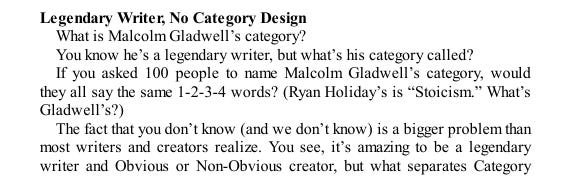
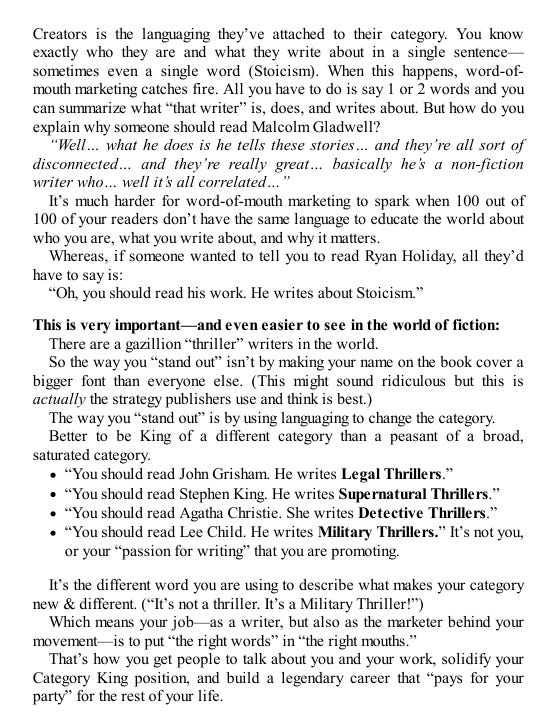
In the book Snow Leopard: How Legendary Writers Create A Category Of One by Nicolas Cole, he speaks about Languaging. It is a word association that a creator builds and stays focused on throughout their career.
If someone wanted to tell you to read Ryan Holiday, they’d have to say is: “He writes about Stoicism.” That’s the power of languaging; “You know exactly who they are and what they write about in a single word.”
(I recommend you to read the section on Languaging from the book below)
How to Use Languaging as Idea Capturing Compass Word
For my newsletter, I have kept a goal to write every Monday.
I aim to make sure that the topic I choose goes back or refers to the main languaging word of my newsletter: speculative journalism and speculative fiction.
Speculative Journalism helps you look forward, imagining what an optimistic future could look like from where we stand today.
Speculative Fiction drops you inside that future through stories set in wildly imaginative worlds to let you live the possibilities.
Anytime I read something, I always ask myself ‘what it means to speculative journalism and speculative fiction’. This is my north star, my compass word.
Since my topic covers writing, thinking, and reading, I extract themes of speculative journalism and speculative fiction under these three variants. It comes up based on whatever news or ideas I read in a newsletter, podcasts, books, or YouTube videos.
From one long-form topic per week, I take three sub LinkedIn posts out of it.
I follow my own 80/20 rule: 80% of ideas spark when I write by hand as and when I scour the Internet.
The other 20% are from note-taking apps or bookmark tools to capture things I might have missed.
I’m aware that great ideas come not because of the tools we use but because of the active thinking we do ourselves as we consume.
Remember George Newman: “Explore what is new to you, not necessarily what is new to the world.”
And that’s all for today!
Did you like reading this edition? Should I do better? Please don’t hesitate to offer me your feedback. I am open to ideas and suggestions.
Feel free to reach me at rayaanjournalist@gmail.com or you can simply reply to this email or comment below. See you soon! 😊❤️