

Quick glance:
How I wrote the wrong ‘Final Vision’
Pattern recognition by Newsroom forecasters
Imagine like a science fiction author
Journaling the rudder of life
A writing prompt for you to tell me about your work in 100 words.
What is this 30-day challenge?
Inspired by NaNoWriMo, where amateur writers attempt a novel every November, I’m writing for 30 days on my Substack. The goal is to put out 30 days of horrible writing, but 30 days of showing up. If anybody’s up for it, join me.
Why writing about the future is good
Sample the obvious future-thinking that we see people do.
A lonely man wonders who could be his future partner.
A pregnant mother hopes and prays for the future of her unborn child.
A farmer tills his soil and predicts it should rain this week.
A finance bro bets his money on a stock. He is certain it may pay off his EMI.
All our life, we see people around us predicting, hoping, dreaming, wondering, and imagining. We do too. But quite often, we don’t pay attention to how we do this, or what we can do with this, or, most importantly, how writing can help us do it better.
The everyday of life forces us to think forward to an optimistic future because we know the present can give us so much more.
Which leads me to the question: Why is writing about the future good?
How I wrote the wrong ‘Final Vision’
It’s August 2023, the first term of the Young India Fellowship at Ashoka University. We had ‘Foundations of Leadership’, taught by a faculty member from the University of Pennsylvania, Dwight Jaggard.
One of his assignments that we had for the course was the ‘Final Vision’, where we had to write an essay of our life 15 years from now. The ‘Final Vision’ could actually be retitled as ‘futures writing’, but I’ll come to that in a bit.
When I wrote my final vision, I was certain that I would still stick to journalism. But I’m a ghostwriter, a newsletterist, and a media consultant now.
I often go back to the final vision essay over the last three years at different stages of my life. Post the fellowship, I kept mulling over how things kept changing every six months. Loss, grief, new opportunities, and closed opportunities were some unexpected drafts of life thrown at me that I did not see coming in the final vision.
But having written down the final essay in practice felt like I had sort of an edge. At that point in time, when I wrote what I felt was right or the most possible outcome of my future, I had a feeling of things under control. But life happened.
Pattern recognition by Newsroom forecasters
When I worked at newsrooms, my financial journalist colleagues wrote predictions about the markets. Sometimes they were right, most times they were wrong, but what they always did was continue to research day after day about the patterns and the closest outcomes that may happen.
Readers loved their work.
Philip Tetlock and Dan Gardner’s ‘Superforecasting: The Art & Science of Prediction’ talks about how forecasting can actually be a source of uniting your thoughts with someone else’s — even if you disagree.
Read the section below from the book:
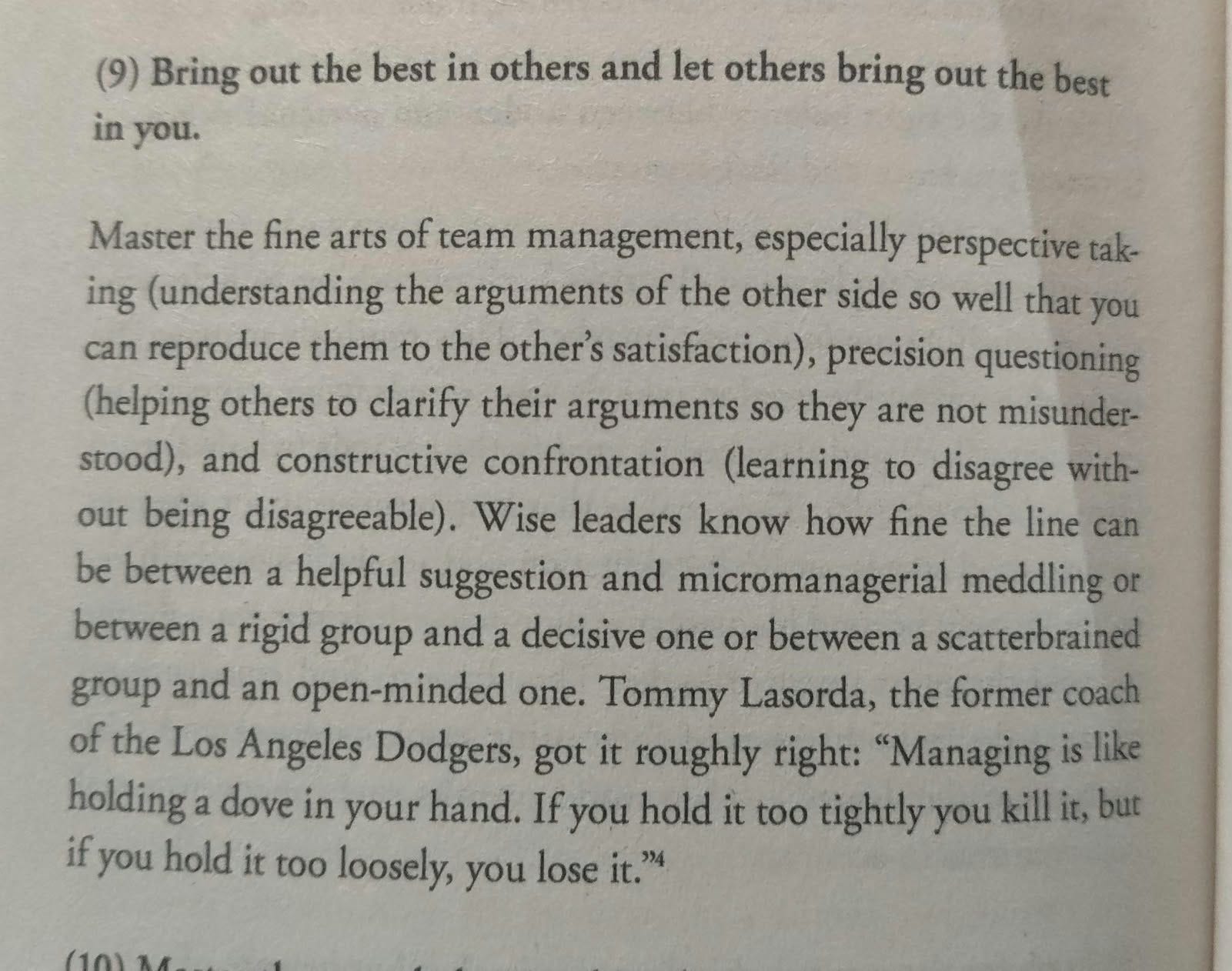
This made me ponder:
Do people who listen and disagree respectfully have a better sense of optimism?
Perhaps they are just hopeful in nature?
Do they hope that their ideas, even if contrarian but still rooted in an ethical framework, can be accepted by someone from the opposite ends of a spectrum?
I could be wrong, but hey, I’m just guessing!
But to be someone who is hopeful, who predicts well, who’s optimistic, has a skill, which is to…
Imagine like a science fiction author
We always think about imagination as something that a child should do, but then imagine thinking along those lines without limits, anchored to a sense of reality.
I like Matthew Kressel’s piece on ‘Writing Positive Futures’.
As a science fiction writer, he wants “worlds that aren’t despairing, but dynamic and alive.” He also adds:

Imagining hopeful scenarios in our journals of a future that we believe is right has the ability to expand our brain. This activity requires our own brain. And let’s us not dump this and ask Claude or ChatGPT to do!
When we see people predict around us, imagine through their art, the next step is to record all of the process, which leads to…
Journaling the rudder of life
I am going to sound like your favorite self-help guru: Love thy journal.
As cliché as this sounds, there is magic in journaling.
Hey, it need not be boring.
It need not be just you recording your present.
It could be something different.
It could be about our future, about what we want to do, what we want to achieve.
That was pretty much what the final vision was about, although it wasn’t final. It was a futures-writing exercise. Writing it gave me an anchor.
Writing our future can perhaps give us a sense of control — the ability to maneuver the rudder as we sail through the unpredictability of life.
Thus, building a legacy requires learning to journal and predict with imagination.
Rayaan Writer’s Day 3 Prompt:
You know the drill — Pick up a pen/paper or your laptop and explain in 100 words
Write a career that you want to have in 10 years
Write a day in the life of how it would be once you have that career.
We just write good horrible first drafts and hit publish!
Ta da! You will be done with your third post!
And that’s all for today!
Reach out to me on LinkedIn to say hi.
You can simply reply to this email or comment below. See you soon! 😊❤️