

Quick glance:
Why fiction writers like N.K. Jemisin start with maps, and how a future-first thinker can map their life
How long-term legacy builders own a range of skills and taste
What is this 30-day challenge?
Inspired by NaNoWriMo, where amateur writers attempt a novel every November, I’m writing for 30 days on my Substack. The goal is to put out 30 days of horrible writing, but 30 days of showing up. If anybody’s up for it, join me.
When cartographers create maps, they explore the globe not with the intent of finding the end destination but just to capture whatever exists on land: from mountains to hills to rivers to streams to valleys to lands to rough oceans.
We use maps to go from one place to another. Long-term thinking often involves exploring uncharted maps.
A future-first thinker has his map drawn out for years ahead. His map of life is filled with side quests from building skills, forging connections, learning to write, and so many winding paths.
Which leads me to how fiction writers build their worlds using maps.
Author N.K. Jemisin, in her MasterClass, says she uses maps to understand her story more deeply. She starts drawing maps, names the cities, designs the geography, builds the politics of the land, and charts the weather systems. This helps her decide how her characters will live, behave, and react.
I adore drawing maps. I find them therapeutic. When you draw maps, you just randomly scribble without any rules, and you create a fiction world. When the piece of work is done, it feels like you actually built a world in your hands.
The same applies to a future-first thinker, someone who is looking to become bold enough to build their legacy.
Life design labs and design thinking use the concept of mapping our life to channel the best version of ourselves over the course of years ahead.
When I watched The Odyssey on IMAX, I kept wondering how a 2,800-year-old epic has endured the test of time.
When kingdoms rose or empires fell, when trades flourished or collapsed, stories have thrived. Herein lies the concept of finding pathways and forked turns as we stumble down our life road.
Long walk ahead
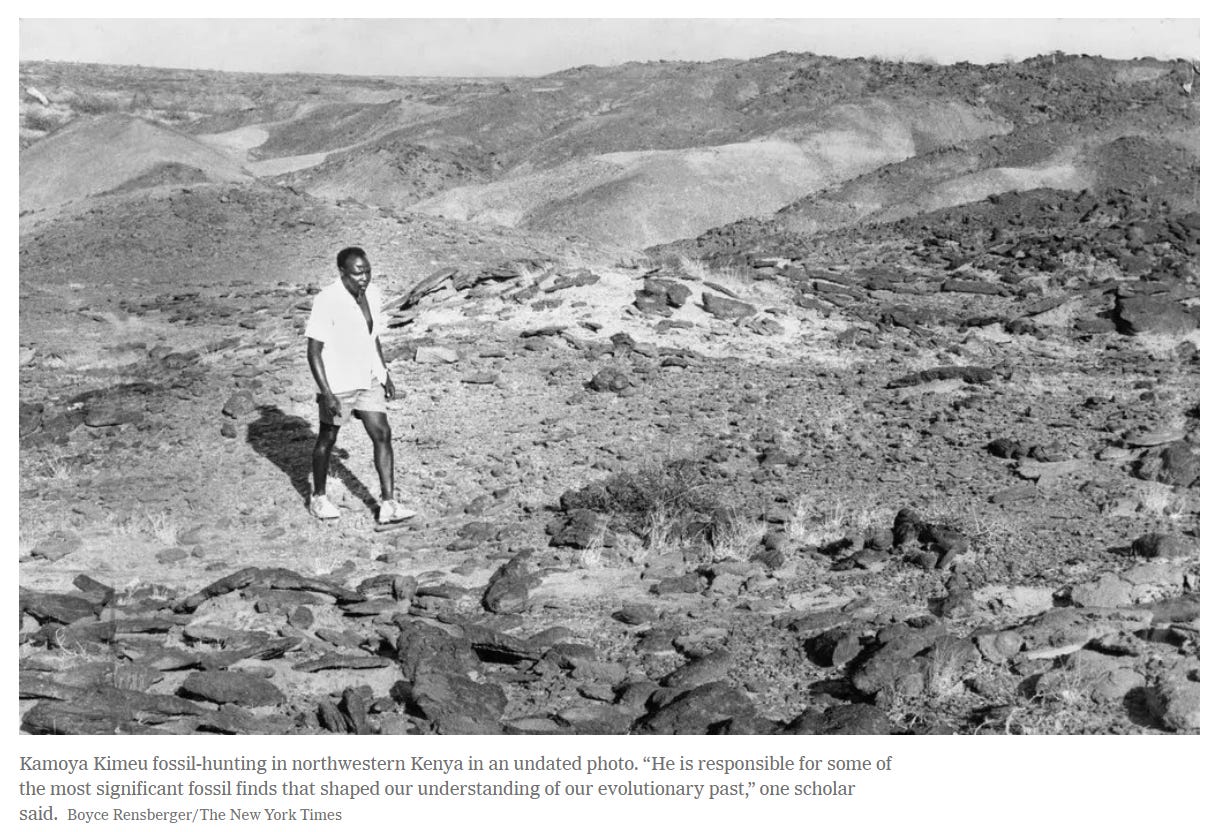
In the book How Great Ideas Happen, George Newman writes about a successful paleontologist from Kenya, Kamoya Kimeu, who had a knack for understanding terrain. Kamoya was a goat herder who walked the land and knew its geography. After answering a local call for help for a paleontological work, he rapidly became skilled at spotting fossils.
The real spark of creativity, Newman says, “often lies in what is new to us, not necessarily what is new to the world.”
Long-term legacy thinkers build a wide range of skills and abilities, and they merge them with taste, so that they are ready, no matter what technological upheavals or disruptions happen in the future.
When someone niches down and just focuses on a single window, the opportunity to explore other rooms is probably locked.
The idea of this newsletter has kept evolving. I ended up following other top writers’ hacks and growth strategies that led me nowhere. But then I knew that the only way to keep going was to keep writing, which would be my highest leverage.
I should be writing for the purpose of writing, and my writing in itself will speak and help me attract legacy builders. This also pushed me to get out of my comfort zone and to force myself to write for the next 25 days.
It is better to be an optimistic, forward-looking wanderer than a hack-sick, tips-following expert niche of one. Explore what is new to you, not necessarily what is new to the world.
Rayaan Writer’s Day 5 Prompt:
You know the drill — Pick up a pen/paper or your laptop and explain in 200 words
I maintain a notebook where I scribble down just the headlines of ideas that I am looking to write: from the most mundane topics to the most imaginative concepts that are worthy of my time and research.
Some of the headlines in my notebook include: “Why do doctors have bad handwriting? Why should students learn to draw maps? How do world-building games help us become better city planners?” The idea is simply to write headlines, and headlines alone, for essay ideas that are bubbling in my head.
We just write good horrible first drafts and hit publish!
And that’s all for today! Reach out to me on LinkedIn to say hi.
You can simply reply to this email or comment below. See you soon! 😊❤️


